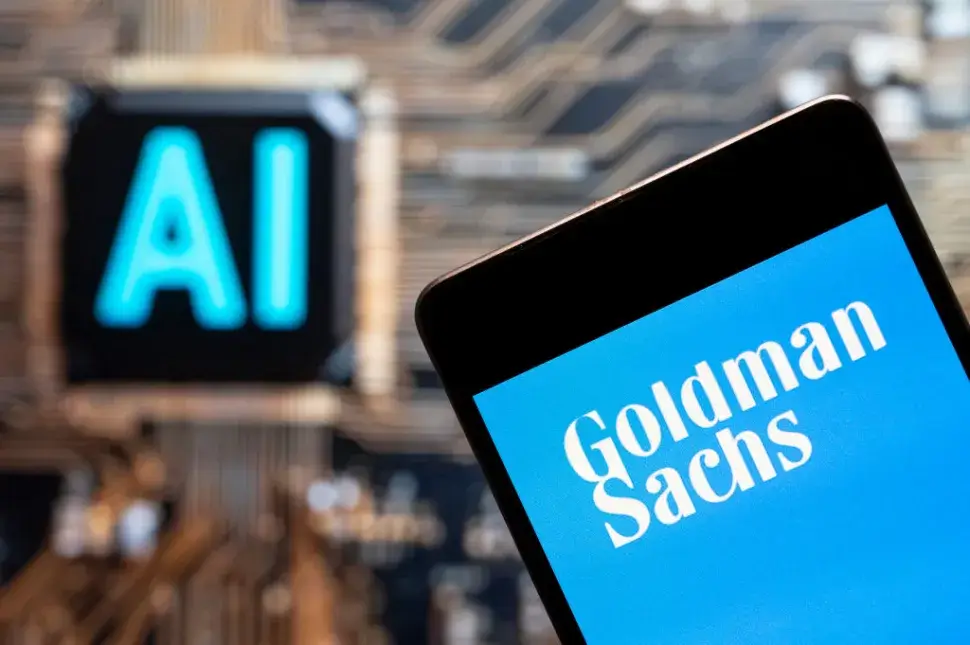
The Goldman Sachs AI Assistant has officially launched across the firm’s 46,500 employees-marking one of the biggest enterprise AI rollouts to date.
While tech companies have been early adopters of generative AI, this moment signals something bigger: AI is no longer a tech experiment-it’s an enterprise reality.
So, what exactly is Goldman’s AI assistant? Why does it matter? And what does it tell us about the evolving relationship between AI, employees, and infrastructure in high-stakes industries?
Let’s break it down.
What Is the GS AI Assistant?
The GS AI Assistant is Goldman Sachs’ in-house generative AI tool designed to support employees with daily tasks like:
- Drafting reports and documents
- Summarizing long PDFs or memos
- Analyzing data trends and creating visualizations
- Structuring client presentations
- Generating insights from large internal datasets
It’s deeply integrated into Goldman’s internal systems and designed with privacy, compliance, and productivity in mind. In many ways, it acts as a secure AI “co-worker” that’s always on, always learning, and always ready to assist.
Why Is This Rollout a Big Deal?
Goldman Sachs isn’t just another enterprise. It’s a global investment bank operating under some of the world’s strictest regulatory and data protection laws. So when Goldman goes all-in on AI-not in a pilot, but across its entire global workforce-it sends a signal:
AI is safe, scalable, and ready for business-when implemented right.
This move marks a turning point. Until recently, most enterprises approached generative AI with caution. Concerns about data privacy, model hallucination, and regulatory compliance held companies back.
But now? We’re seeing a shift from “Can we use AI?” to “How fast can we scale it responsibly?“
AI in the Enterprise: Augmentation, Not Replacement
One of the most refreshing elements of this rollout is how Goldman is framing it: AI as an assistant, not a replacement.
Executives have been clear that GS AI Assistant is meant to:
- Support knowledge workers, not eliminate them
- Accelerate routine tasks, freeing up time for strategic thinking
- Enable better, faster decisions, not replace human judgment
This echoes a broader 2025 trend: the move from AI automation to AI augmentation-helping professionals do more, not do less.
In a world where productivity is a competitive advantage, tools like GS AI Assistant are becoming essential for staying ahead.
What Makes Enterprise-Grade AI Different?
Unlike off-the-shelf AI tools, enterprise-grade AI like GS AI Assistant must be:
- Secure by design (end-to-end encryption, access control)
- Hosted on compliant infrastructure (often hybrid or private cloud)
- Aligned with internal policies (auditable, transparent, controllable)
- Trained on trusted data, not scraped internet content
This is especially important in industries like finance, healthcare, and defense, where data sensitivity and legal compliance aren’t optional-they’re foundational.
Goldman’s approach-building internally, using controlled datasets, and setting strong guardrails-is quickly becoming a blueprint for other enterprises.
How Does This Reflect Broader AI Trends in 2025?
This isn’t just about Goldman Sachs. Their move is part of a much larger global trend:
1. Enterprise AI Assistants Are Going Mainstream
Other giants are doing the same:
- JPMorgan is developing its own “IndexGPT”
- Morgan Stanley has integrated GPT-4 into its wealth management tools
- PwC, EY, and Deloitte are scaling internal AI platforms for auditors and consultants
The takeaway? AI assistants are no longer confined to developers or marketers-they’re now helping bankers, lawyers, doctors, and analysts.
2. Regulated Industries Are No Longer Waiting
If a firm like Goldman Sachs can roll out AI responsibly, others can too. This lowers the perceived risk barrier for sectors like:
- Government
- Healthcare
- Legal services
- Energy and utilities
3. Custom Models > Generic LLMs
Instead of relying on public AI models, large enterprises are now:
- Training custom language models
- Using internal knowledge graphs
- Building domain-specific datasets
- Creating context-aware assistants for each department
It’s AI-but tailored, trusted, and tuned for the enterprise.
What Does This Mean for the Future of Work?
The adoption of AI assistants is already reshaping how teams function. In the coming year, we’ll likely see:
- Shorter report turnaround times
- Fewer repetitive data tasks
- More AI-augmented brainstorming and planning
- Real-time insights embedded into everyday tools
Instead of logging into ten platforms, employees will increasingly ask their AI assistant for answers, summaries, and drafts-within seconds.
That’s not science fiction. That’s 2025.
Final Thoughts: The AI Moment Is Now
Goldman Sachs deploying AI firmwide is not just about one tool at one bank. It’s a symbol of where we’re headed.
AI is moving out of the lab, out of the pilot phase, and into the core of enterprise operations. And as it does, it’s forcing companies to think not just about productivity-but about trust, control, and responsible scaling.
The lesson from Goldman Sachs?
If you want to lead in your industry, your AI can’t just be powerful-it has to be secure, aligned, and purpose-built.